“When the broth was ladled into the bowl, its aroma blending with the rice noodles and beef completely captivated me. I was five years old then, and that image of a steaming, fragrant bowl of pho became one of my most vivid memories.”
— Excerpt from The History of Pho by Andrea Nguyen
In the United States, it’s easy to find restaurants named “Pho.” Since the fall of the Saigon government in 1975, more than 125,000 Vietnamese people have arrived in the U.S., bringing Vietnamese cuisine along with them.
Today, when an American walks into a pho restaurant, they can enjoy pho noodles and bean sprouts in a hot broth, often squeezing in a wedge of lime. For a bolder flavor, many add a bit of Sriracha chili sauce—a staple in Vietnamese restaurants across the U.S.
Vietnamese pho in America ranges from casual eateries to high-end restaurants, with prices varying accordingly. The first Vietnamese pho restaurants in the U.S. opened in the 1980s, mainly in California, Washington D.C., Texas, and New York. For those who left their homeland for the U.S., the distinctive taste of pho evokes memories of home.
The Taste of Home
Andrea Nguyen, a Vietnamese-American author of Into the Vietnamese Kitchen, shared that she and her parents migrated to the U.S. in 1975 and settled in San Clemente, California. Because her family missed the taste of pho from back home, her mother began cooking it at home.
“Like many Vietnamese living abroad, cooking pho was a way to reconnect with our cultural roots,” she said. “My mother would often cook chicken or beef pho on Saturdays, and the next morning—after church service ended at 8 a.m.—we’d rush home to help her serve the bowls of pho on the table.”
Andrea recalls that there would always be green chilies and fresh mint on the table to add to the pho—dishes that reflected the simple meals her parents used to eat in northern Vietnam. “Even though they had lived in Saigon for decades, they never forgot to add bean sprouts and basil to their pho. Sriracha sauce, however, was strictly forbidden—my mother believed it wasn’t part of authentic Vietnamese flavor.”
In an interview, Andrea also shared that her mother would often ask other Vietnamese immigrants for tips on how to make pho tastier. Over the years, Saigon-style pho evolved into a version now known as “American Pho,” which leans toward a sweeter taste rather than being too salty.
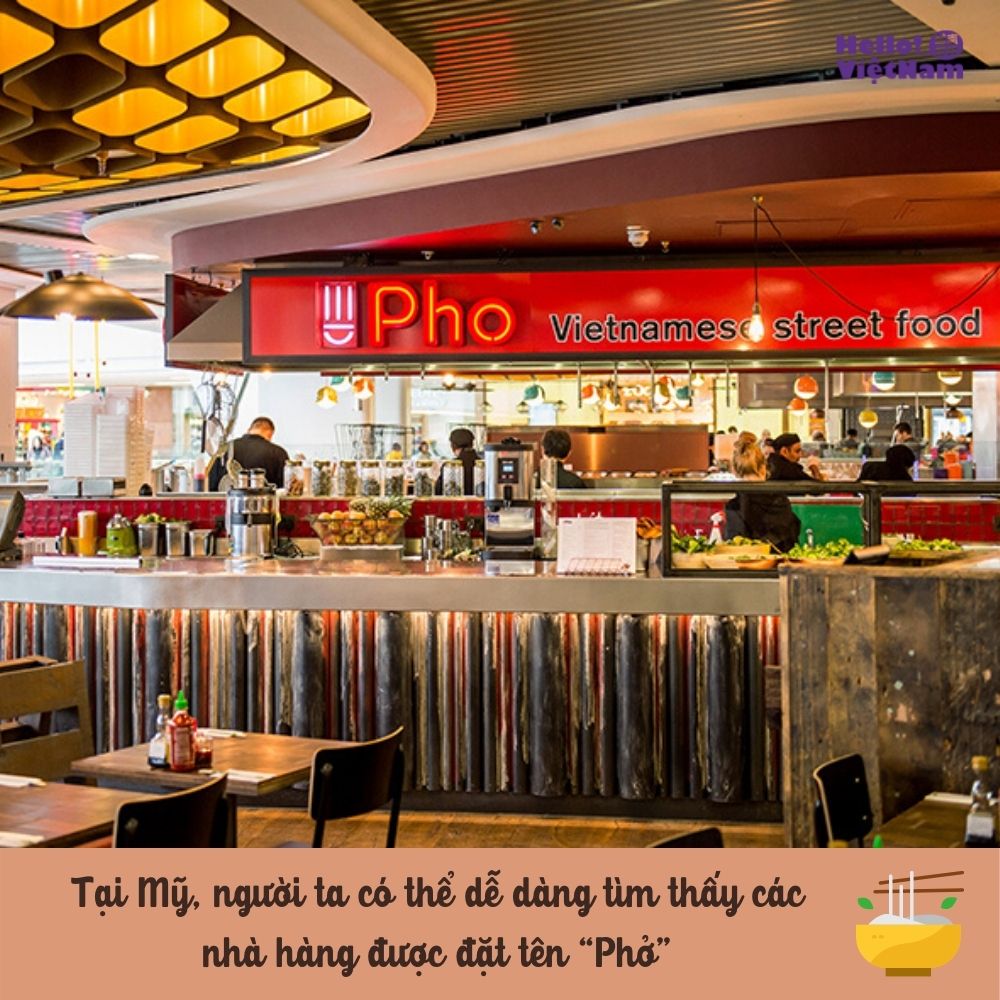
Pho Restaurants Sprouting Up Across the United States
In addition to family-run pho shops, Vietnamese immigrants began expanding their businesses. In 1980, the first pho restaurant in the U.S. opened in Little Saigon, Orange County, California. The regular customers were often Vietnamese veterans who had served alongside American troops during the war, and they introduced pho to many of their American friends. From there, Vietnamese pho gradually made its way into mainstream American cuisine.
Pho began to emerge as a major dining trend among Americans in the 1990s. It can be said that Vietnamese pho has spread from the West Coast to the East Coast and even to Mexico. According to statistics from the year 2000, the annual revenue of Vietnamese pho restaurants in the U.S. reached 500 million USD.
Today, Vietnamese pho restaurants are among the most popular choices for university students and shoppers in malls. The most well-known chains include Pho Hoa and Pho 2000.
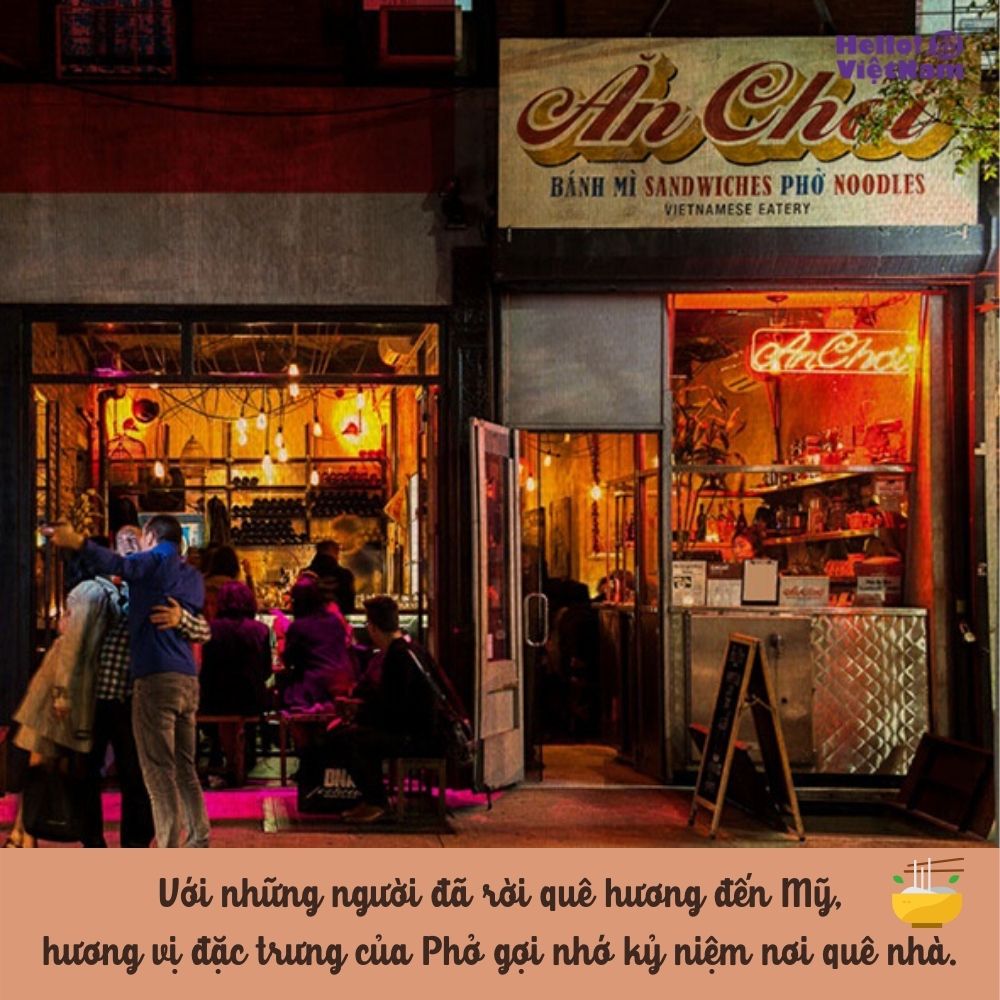
According to Pho Fever, there are a total of 2,741 pho restaurants across the United States, with California leading with 763 establishments, followed by Texas with 274. In the U.S., the quality of pho is often judged by how limited the menu is—the fewer the items, the better. This is because crafting a rich and flavorful broth requires significant effort and time; too many menu options may signal an attempt to make up for a weak broth.
To many Americans, pho is seen as a simple dish, but one with a wonderfully rich broth served with meat and fresh herbs. For those used to greasy, fried foods, pho offers a delicious and healthier alternative. For example, in the book The Classic Cuisine of Vietnam by Bach Ngo and Gloria Zimmerman, the addition of bean sprouts and shallots to Hanoi-style beef pho differs from the authentic Northern Vietnamese version. This variation emerged because many Vietnamese immigrants in the U.S. lacked access to traditional ingredients.
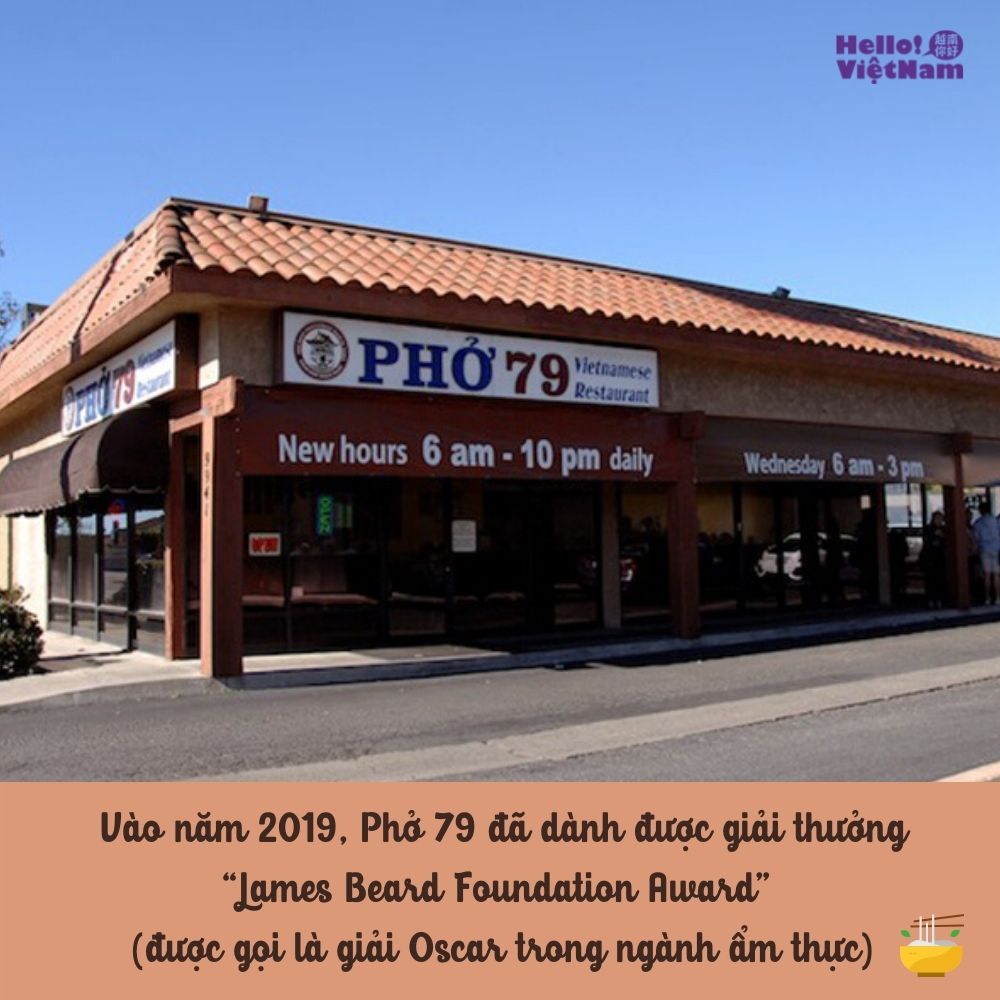
Winning the “James Beard Foundation Award”
After gaining popularity among Americans, Vietnamese pho began to earn formal recognition. Pho 79, a small pho restaurant in Orange County, California, became famous for its oxtail, slow-simmered for 12 hours. The restaurant was opened in 1982 by Mai Tran’s mother and uncle — Mrs. Lieu Tran and Mr. Tho Tran.
Pho 79 not only elevated Vietnamese cuisine in the U.S. but also served as a guiding light for the growth and prosperity of the Little Saigon business district in Southern California.
In 2019, Pho 79 was honored with the prestigious James Beard Foundation Award, often referred to as the “Oscars of the food world.”
After receiving this esteemed award, a representative of Pho 79 shared in an interview:
“If Saigon-style pho is known for its rich, flavorful broth, then Hanoi-style pho is known for its clear broth and the distinctive aroma of star anise. Pho 79 is a fusion of both styles.
The most important thing about Pho 79 is that it helps Vietnamese people in America remember the flavors of home. What we serve isn’t just a bowl of soup — it’s a memory of the homeland. That is the heart of the Pho 79 brand.”